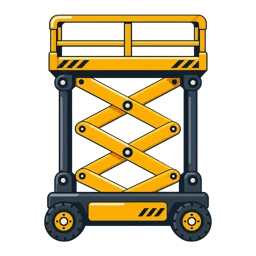
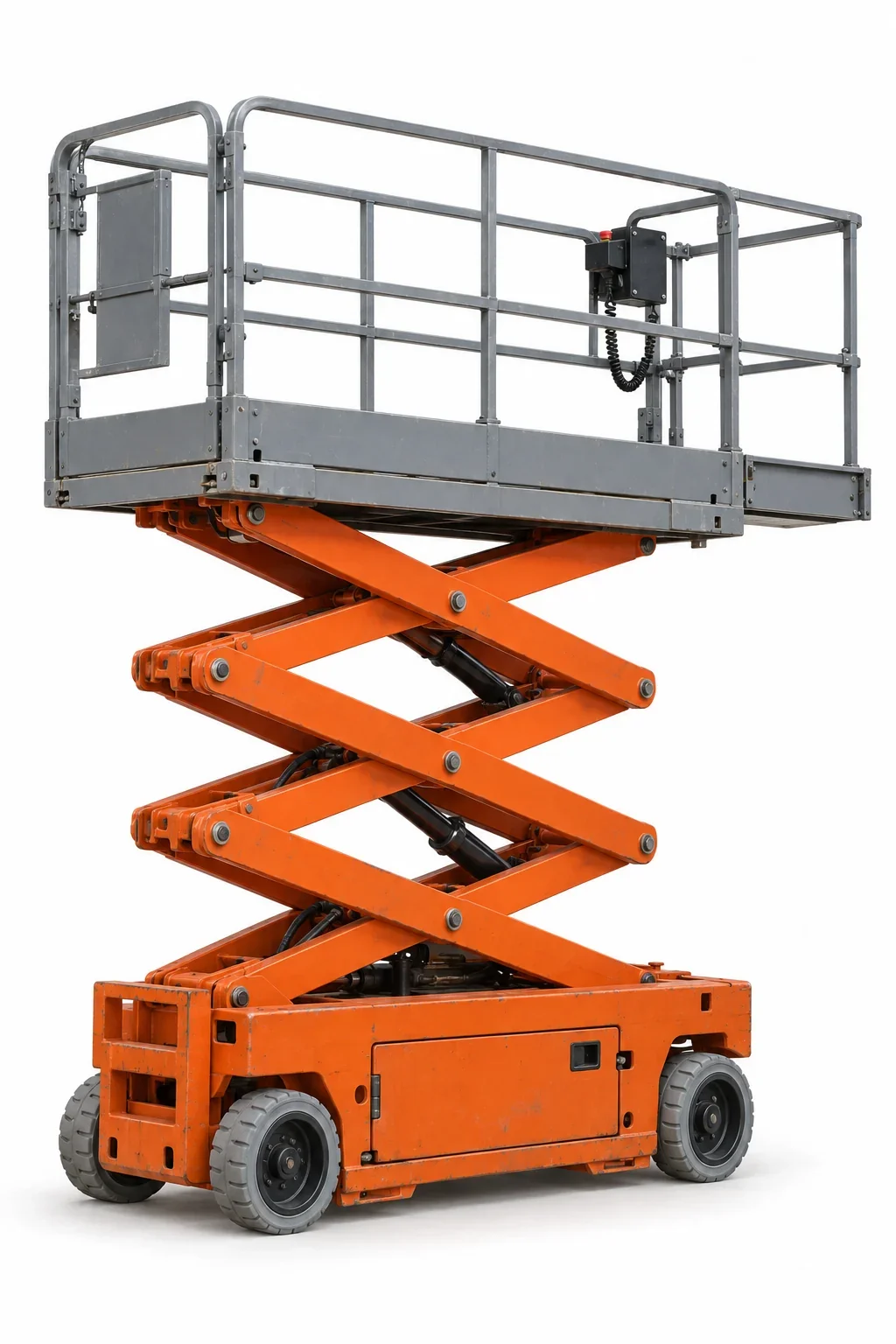
Start with the surface and approach
- Identify whether the machine will cross compacted gravel, clay, or mixed subgrade. Uneven or soft areas point to rough-terrain tires and a wider stance.
- Consider the approach path from staging to the work face. Ramps, drainage swales, and utility crossings can require extra clearance.
Platform height and deck space
- Exterior cladding, steel connections, and overhead utility work call for stable vertical access. Larger platforms help with material handling and trade coordination.
- If the task requires reaching over setbacks or obstacles, compare /boom-lift-rental/ instead of a scissor.
Local weather and hydraulic performance
- Winter cold and summer heat affect hydraulic responsiveness and, on hybrid or electric variants, battery output. Maintenance windows and duty cycles should reflect the temperature range expected on site.
When rough-terrain scissors fit best
- Straight up-and-down exterior tasks where the machine can sit below the work
- Jobsites with unfinished grades where slab units would struggle
- Projects that require deck capacity for tools and components
Alternatives for complex geometry
- Articulating booms handle up-and-over paths around canopies and mechanical runs; see /boom-lift-rental/.
- For indoor phases after the slab is finished, move comparisons to /electric-scissor-lift-rental/.
Keep the comparison specific
A useful equipment discussion starts with the work height, the practical machine position, the route into the area, the floor or ground along that route, and the people, tools, or material involved. Those details clarify whether vertical access, outreach, or material placement is the real constraint.