Where mast lifts make sense
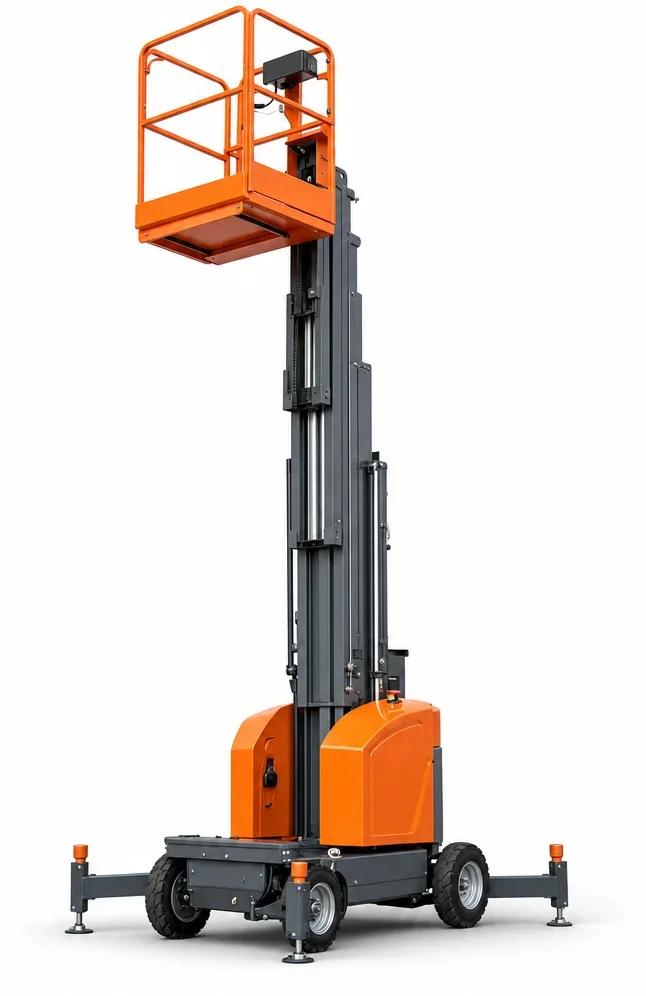
These lifts offer a compact base with a vertical extendable mast. They suit: - Narrow aisles and doorways where scissor lifts are too wide - Sensitive floors needing non-marking tires - Overhead tasks without significant side reach
If the job requires lateral reach or up-and-over movement, compare /articulating-boom-lift-rental/. For wider slab areas with frequent vertical travel, also see /electric-scissor-lift-rental/.
Local interior conditions
Kansas City’s logistics and high-tech interiors often specify clean, fume-free equipment. Non-marking tires and electric power minimize disruption. Check slab ratings around server rooms or equipment pads, and confirm turning space near columns, ducts, and cable trays.
Height, platform, and accessories planning
Define the required platform height, basket capacity, and any task-specific clearance such as under-beam or under-duct measurements. Small bases help threading through obstacles, but platform size and load ratings limit material carry-up compared to larger lifts.
Route and transition checks
Measure the narrowest doorway, threshold ramps, and elevator or liftgate capacities if moving between levels. Temperature and humidity swings can affect traction on polished floors; plan approaches that avoid wet entry points near docks.
Common Kansas City use cases
- Sensor and lighting work above narrow aisles
- Valves, cable tray labeling, and overhead inspections in equipment corridors
- Quick maintenance cycles in high-bay facilities where only vertical reach is needed
Actual conditions, the selected unit’s instructions, and site procedures govern elevated work.