Interior access: non-marking and compact
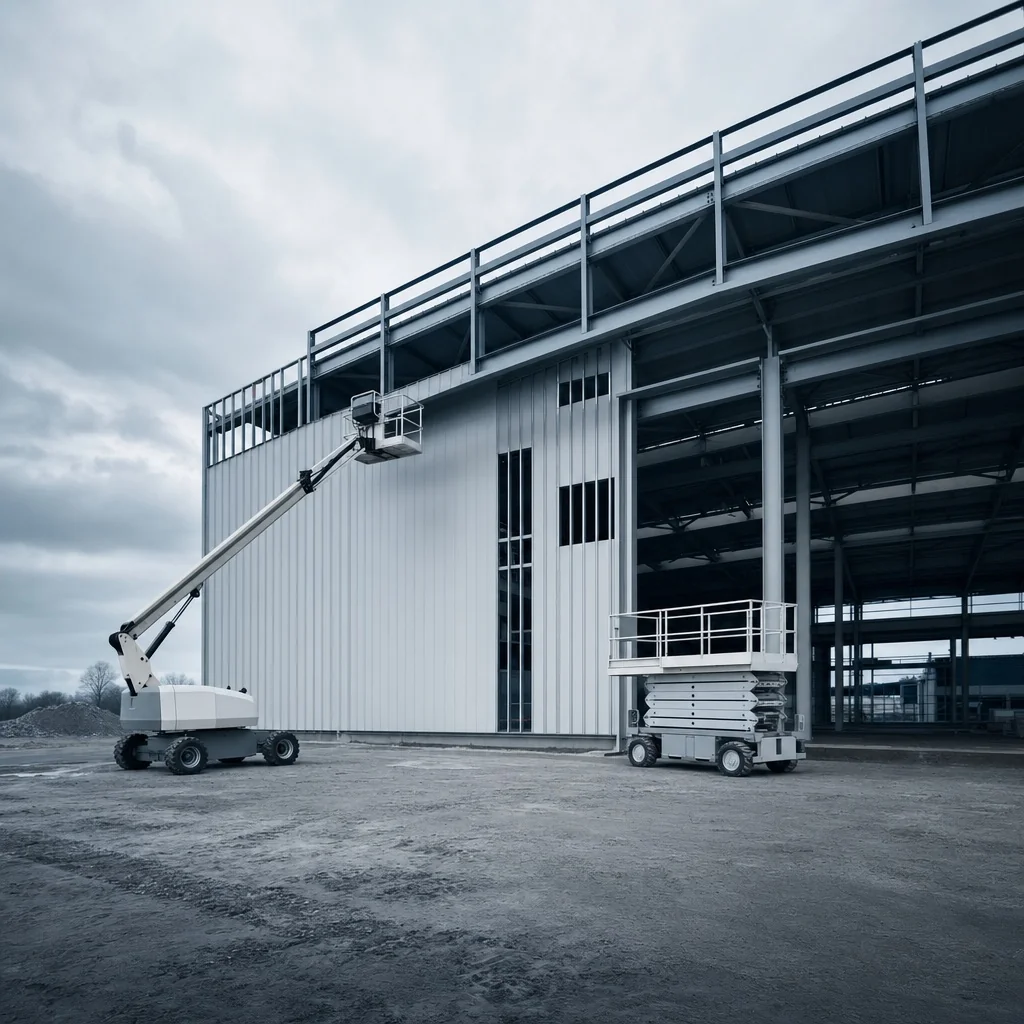
- Electric scissor lifts cover straight-up work along racks and mezzanines when the machine can sit below the task. Tight turning and long battery shifts matter in large facilities. See: Electric Scissor Lifts
- Vertical mast lifts fit narrow aisles and sensitive floors with light point loads and quick repositioning. See: Vertical Mast Lifts
Seasonal temperature swings and humidity in the region can affect battery performance and traction on polished slabs. For high-cycle days, charging access and travel distance inside long bays often shape the choice.
Exterior reach and uneven ground
- Rough-terrain scissor lifts span wider platforms on work that still sits largely vertical but needs higher capacity or slabless approaches. See: Rough-Terrain Scissor Lifts
- Boom lifts handle offset work where the machine cannot sit directly under the task—signage, façade, steel, and utility runs. See: Boom Lifts, Articulating Booms, and Telescopic Booms
On clay-based soils that shift with moisture, ground preparation and machine selection around grade, slope, and bearing capacity become critical.
Material handling around bays and yards
- Telehandlers support staging and lift-in of pallets, HVAC components, and conduit reels where fork reach or rough ground stops a warehouse forklift. See: Telehandlers
- For slab-only interiors, consider a forklift sized to aisle width, turning radius, and rack elevations.
Site support for phased builds
- Temporary lighting and portable power stabilize schedules before permanent utilities come online. See: Generators & Light Towers
- Ground-level storage close to the work reduces travel in large facilities. See: Storage Containers
- Controlled perimeters protect active lift zones and loading lanes. See: Temporary Fencing & Barricades
Key measurements before you call
- Task height and whether the machine can sit below it
- Surface type, slope, and expected weather window
- Route constraints: doors, mezzanine clearances, aisle widths, and turning space
- Load on the platform or forks, plus any outreach needed
For elevated tasks, actual site conditions, the selected unit’s instructions, and site procedures govern safe use. For questions about local corridors and seasonal considerations, visit Products, then see category pages or reach out via Contact.